
 admin
admin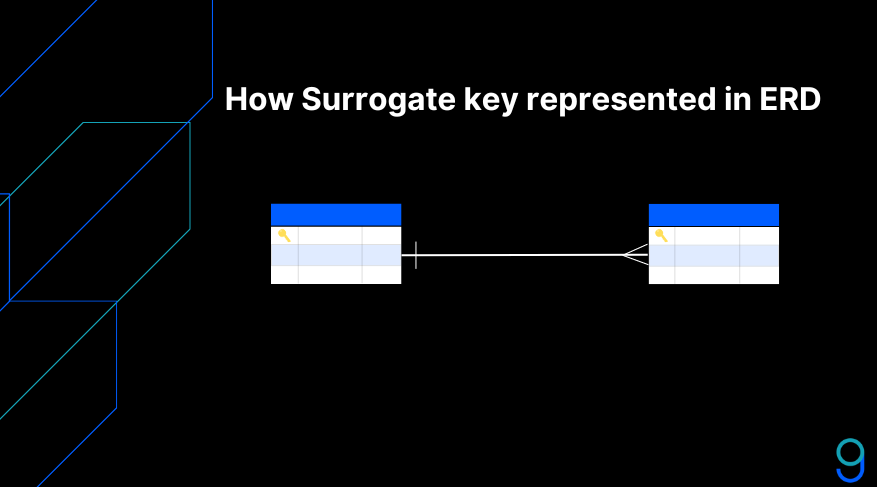
In the grand architecture of data systems, the surrogate key plays a role much like the foundation stone in an ancient temple—silent, unseen, but indispensable. It bears the weight of the entire structure while remaining invisible to those who walk within. In a world where databases are constantly reshaped by evolving business processes, mergers, and software updates, surrogate keys act as the silent sentinels ensuring that the dimensional model—the analytical backbone of decision-making—remains undisturbed.
This isn’t a conversation about mere database design; it’s about how stability is engineered into systems that must dance with perpetual change.
The Identity Paradox: When Real-World Keys Become Fragile
Imagine a grand library that decides to rearrange its shelves every few months. The books remain the same, but their locations—and even their numbering systems—change. Now imagine you had built a digital catalog based on those numbers. Each time the library changes, your catalog breaks. That’s precisely what happens when dimensional models depend on natural keys—the identifiers coming directly from source systems.
These natural keys are bound to business realities: employee IDs that change with HR migrations, customer codes that get reformatted, or product SKUs that vary across systems. The surrogate key is the library’s universal catalog number—stable, system-generated, and immune to such rearrangements.
Just as a reader doesn’t care where the book sits, the dimensional model doesn’t care how the source system evolves. It only needs an unchanging reference point.
Surrogate Keys: The Guardians of Historical Truth
Every organization carries a tapestry of time—how customers behaved last year, how prices evolved, how policies changed. But this historical richness can only be preserved if each version of data is properly distinguished. Surrogate keys make this possible by anchoring every dimension record to its unique point in time.
Without them, the historical narrative collapses. Imagine tracking a traveler’s journey where every stamp in their passport was overwritten each time they crossed a border. You’d lose the story of where they’ve been. The surrogate key prevents such erasure—it allows a data warehouse to say, this was customer 1057 when they lived in Delhi, and this is customer 1057 when they moved to Pune.
For learners enrolled in a data analyst course, understanding surrogate keys is akin to learning the grammar of data history—they define how time, identity, and transformation coexist in harmony.
Isolating Change: The Art of Designing for the Unknown
Change in data sources is inevitable—new systems replace old ones, formats evolve, and business rules shift. A dimensional model without surrogate keys becomes brittle, crumbling with each modification upstream. But when designed with surrogate keys, it stands insulated, capable of absorbing shocks without breaking.
Think of it as an electric adapter. The adapter doesn’t care what country’s socket you’re using—it transforms whatever comes in to fit your device. Similarly, the surrogate key acts as an adapter between volatile source identifiers and the stable analytical model.
When enterprises undergo digital transformation, they often face the dilemma of integrating legacy data with new ERP systems. Those who neglected surrogate keys find themselves rebuilding data pipelines from scratch. Those who embraced them? They simply plug in the new sources and continue.
This design resilience is a lesson emphasized in every data analysis course in Pune, where students learn that durability isn’t about resisting change but about designing systems that can gracefully adapt to it.
The Hidden Symphony of Joins and Lookups
Behind every dashboard lies a symphony of joins—fact tables connecting with dimensions through keys. When natural keys are used, these joins become fragile melodies that can fall out of tune whenever source data changes. Surrogate keys, however, ensure that this orchestra stays perfectly synchronized.
A single surrogate key column might seem trivial, but it allows analytics teams to merge millions of records across time, systems, and versions without error. It simplifies lookups, speeds up queries, and enables data lineage tracing.
When a new employee joins an analytics team and begins exploring customer behavior patterns, they can trust that customer dimension rows represent stable, historical truth—not an ever-changing shadow of live systems.
For professionals honing their skills through a data analyst course, this understanding turns abstract schema diagrams into something poetic—the structure beneath the surface that gives data meaning and continuity.
The Future-Proof Promise: Building Beyond Today’s Systems
Data warehouses and lakes today feed advanced analytics, AI-driven insights, and predictive modeling. As businesses evolve, these systems must support not just today’s data but decades of transformation ahead. Surrogate keys are the backbone of that continuity.
They are not mere database conveniences; they are philosophical statements about permanence in an impermanent world. They assert that while everything else in a business may change—brands, platforms, identifiers—truth must remain traceable.
Organizations that design with surrogate keys are building not just for efficiency but for resilience. They create data ecosystems that remember, reconcile, and recover.
Conclusion: The Power of the Invisible Key
Surrogate keys remind us that strength often lies in what’s unseen. They quietly connect past and present, shield analytical models from chaos, and preserve the storylines hidden in our data.
In a data-driven world that constantly reinvents itself, surrogate keys are the unsung heroes—those invisible anchors ensuring that while systems evolve, insight remains timeless.
Just as a lighthouse remains steady while the sea rages around it, surrogate keys illuminate the path for every data analysis course in Pune and every analyst who seeks to bring order to the storm of change.
Business Name: ExcelR – Data Science, Data Analytics Course Training in Pune
Address: 101 A ,1st Floor, Siddh Icon, Baner Rd, opposite Lane To Royal Enfield Showroom, beside Asian Box Restaurant, Baner, Pune, Maharashtra 411045
Phone Number: 098809 13504
Email Id: enquiry@excelr.com

 Eric Brown